Skip to content
Ranger Green Woobie Hoodie, fabric close-up
Home › Guides › Camo patterns

Ranger Green

U.S. Army special operations, 2003

Ranger Green is a dark green with grey undertones that began as a U.S. Army special operations color for body armor and load-carrying gear. Development restarted in 2003, and the shade was named for the Rangers, the first to receive gear made in it. It is cooler and flatter than olive drab, and it has since spread from military kit to everyday outdoor gear.

Shop Ranger Green

Shop Ranger Green

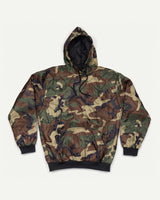
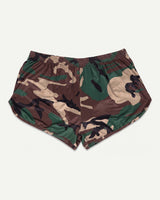
On our gear, Ranger Green is a muted green with a grey cast, and with no print over it, the wavy poncho-liner quilting and the small rip-stop squares show across the whole piece. It is one of two options on every product we make, along with Woodland, so a full set can match: the Blanket and zip-up Blanket 2.0, the Poncho they tie into, the Hoodie, both the Jacket and Jacket 2.0, and Silkies.

The story of Ranger Green

A new color for new gear

Ranger Green started with a request from U.S. Army special operations forces for a new color for body armor and load-carrying gear. Before September 2001, a shade called Mouse Grey had been in development, but it was judged too grey to work in the field. The dyes of the time were part of the problem. The fabric came out uneven, and its streaks grew worse the longer it spent outdoors.

The urgent needs of the first years after 9/11 pushed the project aside. It was revived in 2003, and this time the developers settled on a richer green. Army special operations also wanted common armor and load-carrying gear, which led to a version of the Maritime Load Carriage System already in use with Naval Special Warfare. The new shade was named Ranger Green after the Rangers, the first to receive gear made in it.

Color locked into the fiber

The cure for the streaking was in the fiber itself. Ranger Green became the first solution-dyed Cordura nylon made for military use. In solution dyeing, the color goes into the molten polymer before it is drawn out into fiber, so it runs all the way through each strand. The result matches from one batch to the next, resists fading in the sun and doesn't bleed.

That consistency matters more than it sounds. A plate carrier or a chest rig is sewn from fabric, webbing, binding and thread, often from different mills, and every part of it has to read as one green at a distance.

Why grey

For most of the 20th century, American military green meant olive. The Army moved its field uniforms and equipment to Olive Drab 7 in 1943, then in 1952 to Olive Green 107, a slightly greyer shade that lasted through the Vietnam War. Olive drab is a warm green, with yellow-brown undertones.

Ranger Green pulls away from that family on purpose. Grey undertones make it cooler and flatter, closer to slate than to olive, and it was meant for darker, denser country: heavy foliage, shade, and the low light of dusk and dawn. Under an overcast sky the difference from OD green is easy to see. In direct sun the two move closer together.

From special operations to everyday gear

Once the color existed in solution-dyed nylon, gear makers could offer it to anyone. By 2018, the maker of Cordura listed Ranger Green as a stock color for its solution-dyed fiber, alongside Coyote, Tan and Black. Today it turns up on packs, pouches and rifle slings from many makers, well outside military use.

On a woobie it lands close to where the poncho liner began, as a plain green with nothing printed over it. You can read the liner's story on What is a woobie?, compare it with the greens inside Woodland, or see Coyote Tan, the brown that came into military gear in the same years.

“I bought a size large military green for my 33 YO son for Christmas. He wore it home and every time I see him he has it on.”

Anonymous, Woobie Jacket 2.0 Verified buyer

Ranger Green Woobie Hoodie, hood
Ranger Green Woobie Hoodie, folded
Ranger Green Woobie Hoodie, cuff and hem
Ranger Green Woobie Hoodie, side view

How to spot Ranger Green

Ranger Green is a solid, muted green with grey in it. It is easiest to judge in shade or overcast light, next to another green, where the grey shows.

  • Next to OD green, it looks cooler and flatter. Olive drab is warmer, with yellow-brown in it.
  • Olive Drab 7 and OG-107, the Army greens of World War II and the Vietnam era, both sit in the olive family. Ranger Green was made to leave that family, toward grey.
  • Foliage green, the sage shade in the Army's grey digital pattern of 2005 to 2019, is lighter and paler.
  • Woodland's dark green never appears on its own. It is broken up by light green, brown and black. Ranger Green is one flat field of grey-green.
  • In bright sun the gap to OD green shrinks, so compare the two in shade.

Ranger Green questions

Sources
  • blueforcegear.com Ranger Green developed to fulfill an Army SOF requirement for a new armor and load carriage color; pre-9/11 Mouse Grey deemed too grey; dye processes of the time gave inconsistent color with striations that worsened outdoors; early GWOT pushed the project back; revived in 2003 with a richer green; common armor and load carriage requirement led to a variation of the Maritime Load Carriage System fielded by Naval Special Warfare; named for the unit that received the initial fielding; first solution-dyed Cordura for military use; more desaturated than OD with grey undertones, suits dark foliage and low light (history credited to Soldier Systems)
  • blueforcegear.com OD green used since World War II, warm with yellow-brown undertones; Ranger Green cooler with grey undertones that move it away from the olive family; designed for darker, denser environments; under indirect or overcast light it looks flatter and greyer
  • soldiersystems.net Ranger Green born of Army SOF requirements in the early 2000s; slate-like grey undertones; blends into shadow and low light at dusk and dawn; in direct sunlight the difference from OD green can shrink; Ranger Green rifle slings
  • soldiersystems.net Solution dyeing locks color in at the molten polymer extrusion level, giving shade consistency lot to lot and across textile components, UV-fade resistance, no bleeding; solution-dyed Cordura TrueLock fiber offered in Desert Sand, Tan, Coyote, Ranger Green, Camo Green and Black (2018)
  • en.wikipedia.org Olive Drab 7 for field uniforms and equipment from 1943; replaced in 1952 by the slightly greyer Olive Green 107, the combat uniform color through the Vietnam War
  • en.wikipedia.org UCP colors Desert Sand 500, Urban Gray 501 and Foliage Green 502 (tan, grey and sage green); Army use 2005 to 2019
  • ciehub.info Woodland's colors are Army shades Light Green 354, Dark Green 355, Brown 356, Black 357

Net Orders Checkout

Item Price Qty Total
Subtotal $0.00
Shipping
Total

Shipping Address

Shipping Methods