Skip to content
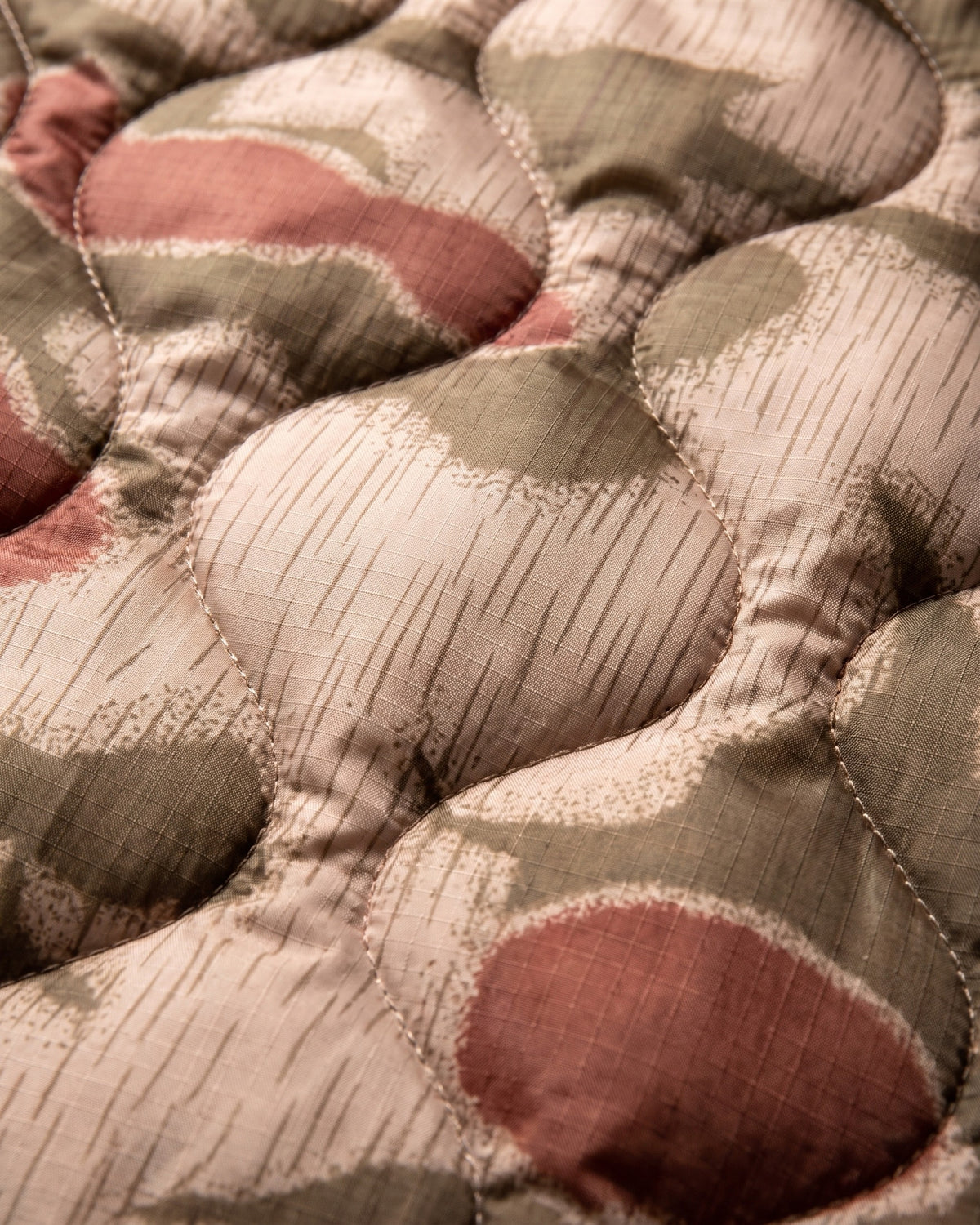
Sumpftarn Woobie Hoodie, fabric close-up
Home › Guides › Camo patterns

Sumpftarn camo

Germany, 1943, revived by West Germany's border guard in the 1950s

Sumpftarn is German for "marsh camouflage": soft-edged green and russet-brown shapes over a tan base. It first appeared in 1943 on Wehrmacht smocks, helmet covers and winter suits as a blurred, greener take on the older splinter pattern, and West Germany's federal border guard wore modified versions from the 1950s until 1976. Woobie Gear makes it on the Woobie Hoodie.

Shop Sumpftarn

Shop Sumpftarn

Our Sumpftarn print has a sandy tan base, soft olive-brown shapes, russet patches with a pale blurred edge and fine streaks running through it. Like every camo we make, it takes its look from the original pattern. It comes on the Woobie Hoodie only, in Small to XXXL, quilted with a rip-stop nylon shell, 100% polyester active insulation and a DWR finish.

The story of Sumpftarn

What the name means

Sumpf is German for swamp or marsh, so Sumpftarn translates as marsh camouflage. Collectors also call it Sumpfmuster, "marsh pattern". The name covers a small family of related prints: two made during the Second World War, and several more made in West Germany afterwards.

The 1943 pattern

German forces had used a sharp-edged splinter pattern since 1931. The marsh pattern of 1943 kept similar geometric shapes and added a dithered border around each one, so the edges blur into the background. It also flipped the balance of colors, with larger green patches and smaller russet-brown ones, which pushed the overall look greener and better suited to forest.

No two factories printed it quite alike. Surviving pieces range from distinctly green to tan or khaki, and Camopedia puts that down to conditions in each factory. The pattern went onto smocks, helmet covers, winter combat suits and overpants, and onto a chemical protective suit. The smocks and winter overpants reversed to white for snow, and the two-piece suits were cut to go over the ordinary wool or Drillich uniform. It was meant to work all year round.

The 1944 variant

A second version followed in 1944 and was made until the end of the war in 1945. It dropped the hard edges altogether: each patch sits inside a halo of small dots that fade into the base, so the geometric look is gone. Production seems to have been limited to paratrooper jump smocks and jackets for Luftwaffe field divisions, which is why collectors sometimes call it the Luftwaffe marsh pattern.

The border guard revival

West Germany set up the Bundesgrenzschutz, its federal border guard, in 1951. It was a lightly armed police force for border and internal security, separate from the Bundeswehr. The border guard first wore a copy of the old splinter pattern, then brought back a modified marsh pattern in the 1950s. Sources differ on the exact year, with Wikipedia saying the early 1950s and Camopedia the late 1950s.

Camopedia describes three post-war versions. The first had russet and olive shapes with blurred edges on khaki, with olive rain streaks running down over them, and it was made into field jackets, smocks, trousers, caps and shelter halves. A second, from the mid-1960s, overlapped the patches and seems to have been short-lived. The third lasted longest: overlapping russet patches with a blurred tan border and heavier rain streaks, on field jackets, insulated parkas, rain aprons, helmet covers and vest covers.

Those items stayed in production until 1976, when the border guard officially dropped camouflage. Camopedia suggests the aim was to make the force look less military in public. The West German army had stayed in plain olive for decades and later moved to Flecktarn, a different pattern made of small dots. The border guard itself was renamed the Bundespolizei, Germany's Federal Police, in 2005.

Why it still turns up

Because the post-war prints follow the wartime design so closely, collectors find border guard pieces hard to tell from 1940s ones, and fake wartime items made from post-war fabric are known. Outside collecting, the pattern gets picked for its colors. The russet patches, soft edges and fine streaks look more painterly than the crisp prints that came after it. For the other patterns we make, see our guide to every Woobie camo.

“Excellent customer service, fits well and is very warm. I’ll probably buy another”

Thomas W., Woobie Hoodie Verified buyer

Sumpftarn Woobie Hoodie, hood
Sumpftarn Woobie Hoodie, folded
Sumpftarn Woobie Hoodie, cuff and hem
Sumpftarn Woobie Hoodie, side view

How to spot Sumpftarn

Sumpftarn sits between the hard-edged splinter prints before it and the dotted Flecktarn after it. Look at the edges of the shapes first.

  • Soft edges: every patch fades into the base, where splinter camo has crisp, straight-sided shards.
  • Russet and green: the two main colors sit on a tan or khaki ground, and wartime pieces vary a lot from green to tan.
  • Rain streaks: fine vertical lines running down over the shapes are typical of the post-war border guard versions.
  • Flecktarn is built from small separate dots. Sumpftarn uses larger patches with blurred borders.
  • The 1944 wartime version rings each patch with small dots and turns up mostly on Luftwaffe paratrooper smocks.

Sumpftarn questions

Sources
  • en.wikipedia.org Sumpftarnmuster (marsh camouflage) is a saturated, greener version of splinter camouflage, first issued to Wehrmacht units in 1943 as smocks, helmet covers and winter overpants; smocks and overpants reversed to white; two-piece uniform worn over wool or Drillich uniforms; meant to work all year; Bundesgrenzschutz used a modified version in the early 1950s
  • camopedia.org 1943 marsh pattern kept the shapes of Heeres-Splittermuster 31, added dithered borders and reversed the color ratio (larger green, smaller russet-brown patches); prints vary from green to tan or khaki because of factory conditions; used on helmet covers, smocks, winter combat suits and a chemical protective suit; 1944 version issued to the end of the war with patches bordered by fading dots, apparently limited to paratrooper jump smocks and Luftwaffe Field Division jackets
  • camopedia.org Bundesgrenzschutz first used a splinter copy, then revived the marsh pattern in the late 1950s; three post-war versions (khaki ground with olive rain streaks; mid-1960s overlapping patches; longest-lived version with russet patches, blurred tan border and heavier rain streaks); items in production until 1976 when camouflage was officially discontinued for the BGS, apparently to de-militarise its public image; post-war pieces hard to tell from wartime ones and fakes made from post-war fabric are known; the West German army stayed mostly in olive and later adopted Flecktarn
  • en.wikipedia.org Bundesgrenzschutz established in 1951 as a mobile, lightly armed police force for border and internal security, separate from the Bundeswehr; renamed Bundespolizei in July 2005

Net Orders Checkout

Item Price Qty Total
Subtotal $0.00
Shipping
Total

Shipping Address

Shipping Methods