Skip to content
Tiger Stripe Woobie Hoodie, fabric close-up
Home › Guides › Camo patterns

Tiger Stripe camo

South Vietnam, 1957 to 1975

Tiger Stripe is a camouflage pattern of sideways, brushstroke-like stripes in green, brown and black over a light base, first made in South Vietnam in the late 1950s. U.S. Special Forces, Navy SEALs and long-range patrols made it famous during the Vietnam War, even though the U.S. never adopted it as an official pattern.

Shop Tiger Stripe

Shop Tiger Stripe

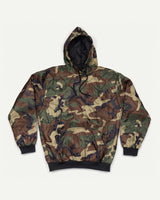
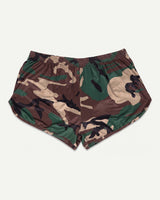
Our Tiger Stripe print is a dense, high-contrast take on the pattern: sand-colored stripes, green and brown strokes, and broad bands of black, all running sideways across the quilting. You can get it on the Hoodie, the Jacket, the Jacket 2.0 and Silkies. On the Hoodie, the hood and interior lining are moving from Tiger Stripe to solid black, and depending on stock yours may arrive with either.

The story of Tiger Stripe

A French pattern, redrawn in Vietnam

Tiger Stripe's roots are in the Lizard pattern that French troops wore from 1947, through the First Indochina War. Lizard was a set of green and brown brushstrokes with a strong sideways direction, meant to cut across the upright line of a body. After the French left, the first Tiger Stripe appeared in 1957 as a locally made copy of Lizard for South Vietnam's Marine Corps. The strokes changed in two ways: they interlock instead of overlapping, and far less of the pale background shows through.

The Marines kept developing it, with a sparser version in 1959 and a dense one, later nicknamed "sea wave," in 1968. South Vietnam's Rangers and Special Forces took up their own variants, and the Civilian Irregular Defense Group, the village militias trained by U.S. Special Forces, wore it from 1963 until the program ended in 1971.

How Americans ended up in it

U.S. advisors attached to South Vietnamese battalions were allowed to wear their partners' combat uniform, and Special Forces took to Tiger Stripe in late 1962 and early 1963. There was a practical reason too. The Army's olive drab OG-107 fatigues stayed damp in the jungle and showed a solid outline against the leaves. Tiger Stripe broke that outline up, and the men who wore it valued the few seconds of confusion it bought after contact.

Getting it to fit was the hard part. Vietnamese uniforms were often too small for Americans, so early wearers had sets made by local tailors. From 1964 the 5th Special Forces Group contracted makers in Vietnam and across Southeast Asia for fatigues and boonie hats, and Marine Corps advisors were buying Tiger Stripe items from 1963. The pattern became the look of MACV-SOG reconnaissance teams in Laos and Cambodia, SEALs on the rivers, long-range patrols, and the Australian and New Zealand SAS.

Why there are so many versions

No two batches were quite alike. Fabric was printed in South Vietnam, Thailand, Korea and Japan, including Okinawa, and stripe shapes, density and dyes drifted from maker to maker and run to run. Collectors still use names set out in Richard Johnson's 1999 book Tiger Patterns: John Wayne Sparse from about 1962, John Wayne Dense from about 1964, Tadpole Sparse (the "silver tiger") from about 1964, the Advisor's types (one called the "gold tiger") from about 1968, and the late-war lightweights of 1969. John Wayne Dense took its name from the 1968 film The Green Berets, where it was widely worn. Some experts count close to two dozen variants, and production ran until 1975.

Replaced, then revived

From 1967 the U.S. ERDL leaf pattern, the forerunner of Woodland, gradually took Tiger Stripe's place in reconnaissance teams, and after the war American special operations went back to woodland patterns. Tiger Stripe lived on elsewhere. Thailand and the Philippines have been its most prolific makers since the war, and special forces in both countries have worn it. A desert version appeared shortly before the 1991 Gulf War, with the U.S. Marine Corps buying the first run to evaluate.

It still turns up in the U.S. In August 2019 Green Berets of the 5th Special Forces Group wore Tiger Stripe during a training exercise at Fort Campbell, Kentucky, a nod to the group's Vietnam roots. Original Vietnam-era sets are now prized by collectors. For how it compares with the other patterns we make, see our camo patterns guide.

“I love my tiger stripe woobie hoodie! I like that it’s a unique camo design too.”

Kylie, The Woobie Hoodie Verified buyer

Tiger Stripe Woobie Hoodie, hood
Tiger Stripe Woobie Hoodie, folded
Tiger Stripe Woobie Hoodie, cuff and hem
Tiger Stripe Woobie Hoodie, side view

How to spot Tiger Stripe

Tiger Stripe reads as sideways stripes from across a room, and as layered brushstrokes up close.

  • The strokes run sideways and interlock. There are no round blotches, dots or pixels.
  • Broad black strokes sit over narrower green and brown ones, with a light olive or khaki base showing between them.
  • Next to French Lizard, Tiger Stripe is darker and tighter. Lizard's green and brown strokes overlap and leave much more of the pale base showing.
  • Next to ERDL or Woodland, the difference is shape: those use rounded, leaf-like blotches.
  • Shades vary a lot by maker, so two genuine Vietnam-era shirts can look quite different.

Tiger Stripe questions

Sources
  • en.wikipedia.org French Lizard (TAP47) used by the French Army from 1947, strong horizontal orientation; Tiger Stripe descends from it, with printed areas interlocked rather than overlapped and smaller patches of background color
  • camopedia.org First Tiger Stripe was a locally made copy of the French lizard pattern for the Vietnamese Marine Corps, first produced 1957; VNMC sparse 1959, dense ('sea wave') 1968; John Wayne Sparse 1962 or 1963 with production until 1975; John Wayne Dense about 1964, believed made in Japan, possibly Okinawa, worn by Vietnamese, American and Australian SAS; Tadpole Sparse ('silver') about 1964; Advisor's types about 1968 (sparse called 'Gold tiger'); late-war lightweight 1969; Desert Tiger introduced shortly before Desert Storm 1991, first run bought by the USMC for evaluation
  • sofmag.com Vietnamese Marines evolved the French lizard pattern into Tiger Stripe in 1957; OG-107 fatigues stayed damp and outlined the wearer; Tiger Stripe gave seconds of advantage after contact; worn by MACV-SOG recon teams in Laos and Cambodia, SEALs on river operations, LRRPs; local tailors made fatigues for larger Americans; ERDL from 1967 gradually replaced it in recon units; original sets highly collectible
  • en.wikipedia.org Unclear who developed the first tiger stripe; US Special Forces adopted it late 1962 to early 1963; advisors could wear their Vietnamese unit's uniform; CIDG used it from 1963 until disbanded in 1971; 5th Special Forces Group contracted for tiger stripe fatigues and boonie hats from 1964; Marine advisors contracted from 1963; never an official US-issue item; made in Thailand, Korea and Okinawa with many variations; Thailand and the Philippines most prolific makers since the war; Australian and New Zealand SAS wore it in Vietnam; Philippine Special Forces and Thai PARU users
  • vietnamgear.com Richard Johnson, author of Tiger Patterns, named John Wayne Dense after its use in the film The Green Berets
  • en.wikipedia.org The Green Berets, starring and co-directed by John Wayne, released in 1968
  • breachbangclear.com Some experts suggest nearly two dozen Tiger Stripe variants
  • schifferbooks.com Tiger Patterns by Richard D. Johnson, a guide to Vietnam War tigerstripe patterns (Schiffer)
  • headstamppublishing.com South Vietnamese users included Special Forces (LLDB), Marines, Rangers, CIDG, Mike Force and MACV-SOG
  • militarytimes.com 5th Special Forces Group soldiers wore Vietnam-era tiger stripe during training at Fort Campbell, Kentucky, in mid-August 2019; after the war US special operations returned to woodland patterns

Net Orders Checkout

Item Price Qty Total
Subtotal $0.00
Shipping
Total

Shipping Address

Shipping Methods