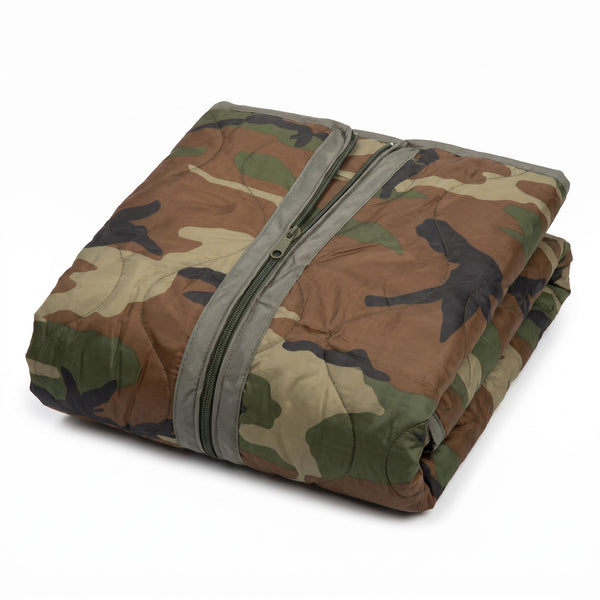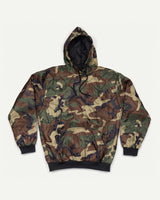

Where the word comes from
Nobody knows for sure. The earliest known use of "woobie" is in the 1983 film Mr. Mom, where a little boy calls his security blanket his woobie. Whether soldiers took the name from the film is a guess, not a documented fact.
Other stories get passed around too. One says it comes from "would be," as in you would be cold without it. Another links it to the Korean word for rain gear. None of them has solid evidence behind it. What veterans do agree on is that the nickname spread through the 1990s and stuck for good with the generation that served after 2001.
Either way, the meaning is clear. A woobie is the thing you don't want to give back.
A short history
The poncho liner first went to U.S. Special Forces in Vietnam in the early 1960s, around 1962 to 1963. It was made for wet, hot jungle conditions as a lighter alternative to the wool blanket, which was heavier and slow to dry. By the late 1960s it was in wide use across the Army and Marine Corps.
Its look changed with the times:
- The first liners were plain olive green.
- Early camouflage versions were sewn from spotted camo parachute cloth, with a seam down the middle until wider fabric became available in the early 1970s.
- ERDL camo came next, then Woodland in the 1980s, which is still the pattern many people picture.
- Later versions followed the uniforms: three-color Desert, the Marine Corps' reversible MARPAT, and the Army's UCP.
The military still uses them today, and genuine surplus liners are easy to find.
How a woobie is made
The design is simple, and that's most of its appeal. The current military specification, MIL-DTL-43335, describes it like this:
| Official name | Liner, Wet Weather Poncho |
|---|---|
| Shell | Ripstop nylon on both sides |
| Fill | Polyester batting, quilted in place so it doesn't shift |
| Edges | Nylon binding all the way around |
| Ties | Eight cords, one at each corner and one halfway along each side, for tying it to a poncho |
| Size | Roughly 5 by 7 feet (listed sizes vary by maker and version) |
Polyester fill is the key detail. It keeps insulating when it's damp and dries quickly, which is why the liner beat wool in the jungle and why people still trust it outdoors.
What it's for
The specification says it plainly: tie the liner into your poncho and you have a lightweight sleeping cover, or use it on its own as a blanket. In practice, people found a lot more uses for it. It works as a pillow, a seat on cold ground, a roof under a tarp, a hammock quilt and a wrap on a long ride.
At home it's the same story. A woobie lives on the couch, in the back seat, in the truck, at the game and on the dog's bed. It packs down small enough to keep one everywhere.
How warm is a woobie?
Warmer than it looks, but there's no official temperature rating. You'll find numbers online, often credited to the Army, and we couldn't trace any of them to an Army source. Treat a woobie as a warm layer: great on its own on cool nights and inside a sleeping bag when it's cold. It isn't a winter sleeping bag by itself.
Why people love them
A woobie is light, packs small, dries fast and stays warm when it's damp. That covers the practical side. The rest is harder to measure. People carried one through hard places and long nights, and it became the one comfortable thing they could count on. Plenty of veterans kept theirs after they got out, and some have been handed down in families.
Soldiers have also been wearing them for a long time. During the Vietnam War, some had their liners tailored into jackets, and veterans still cut old liners into hoodies today.
From poncho liner to hoodie
That's where Woobie Gear comes in. We make woobies, and we make the woobie you can wear:
- The Woobie Blanket is the classic: ripstop nylon over 100% polyester insulation, with a durable water-resistant finish and tie cords on the edges.
- The Woobie Blanket 2.0 adds a zipper, so it closes into a lightweight sleeping bag or adds a layer to the one you have.
- The Woobie Poncho is the wet weather poncho, with a hood and grommets for tying it off as a quick shelter.
- The Woobie Jacket and Jacket 2.0 use the same material as the Woobie Blanket, cut into a full-zip hooded jacket.
- The Woobie Hoodie is quilted and built like the blanket, with a softer, lighter nylon shell, made to wear as a mid-layer.
Over 38,000 woobies sold so far, shipped from Carrollton, Texas.