United States, tested in 1976, worn in the Gulf War
Desert Night camo, also called night desert camo, is the two-color green grid pattern the U.S. military created in the 1970s to defeat Soviet-made night vision. Troops pulled it on as a parka and overpants over their desert uniforms after dark, most widely in the 1990 to 1991 Gulf War, and it was retired once night vision moved on. Woobie Gear makes it on the Woobie Hoodie and both Woobie Jackets.
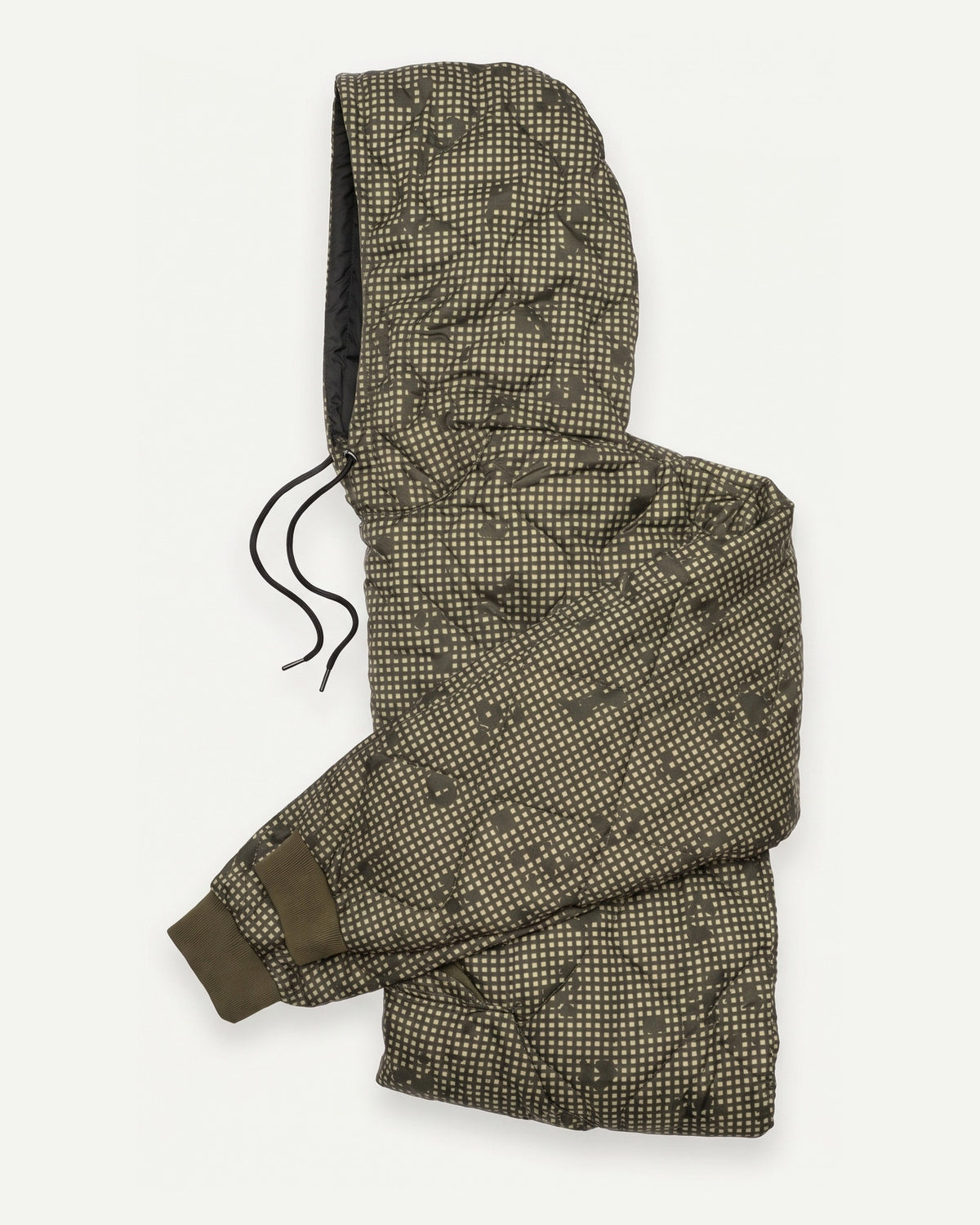
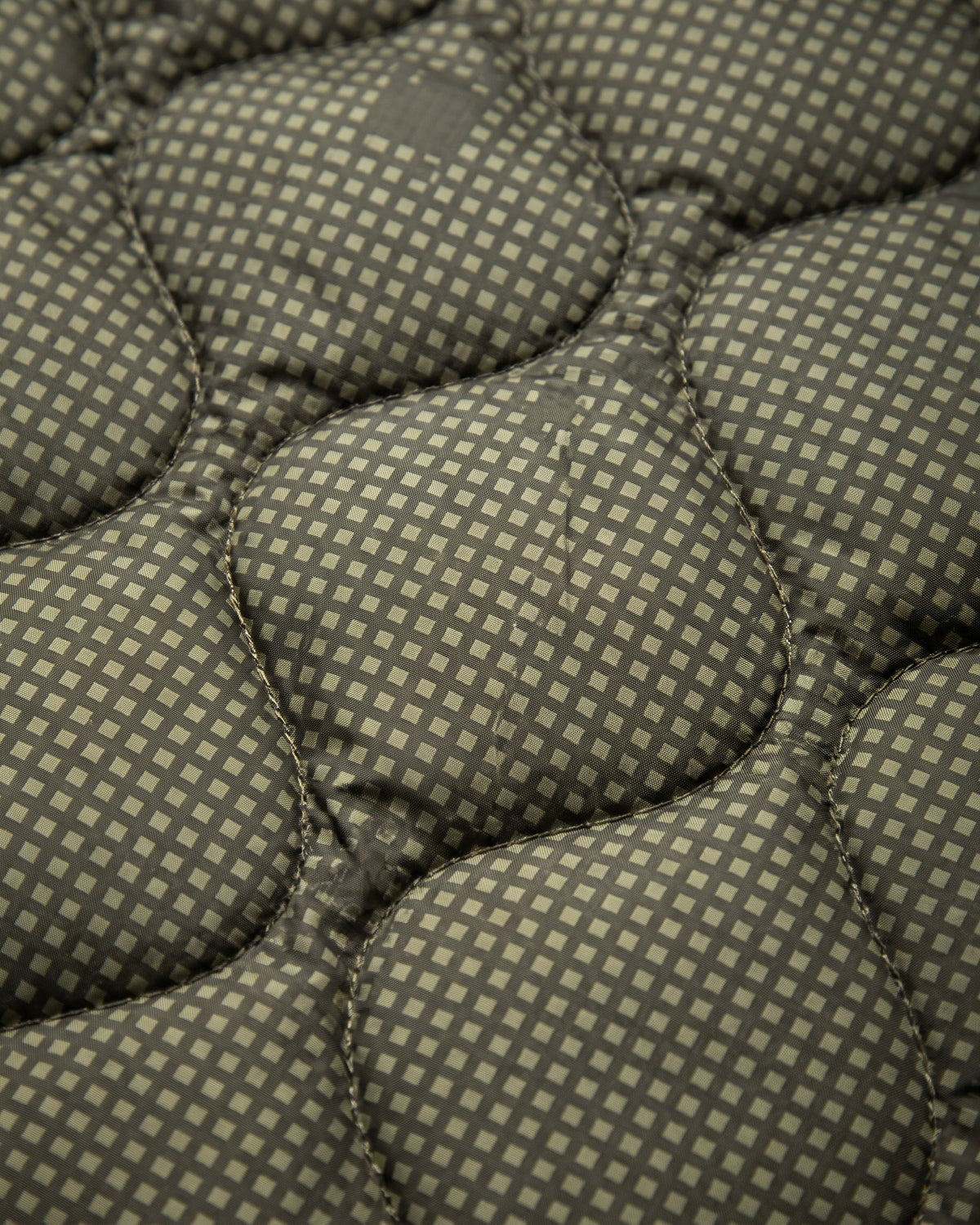
Our Desert Night print is a dense grid of light green squares on olive, with darker blotches scattered across it. It comes on the Woobie Hoodie, where the store lists it as Desert Night, and on the Woobie Jacket and Jacket 2.0, listed as Desert Night Camo. It's the same pattern on all three. The Jackets use the same lightweight insulating material as the blanket. The Hoodie is built the same way, with a softer and lighter nylon shell.
Desert Night was drawn for what an enemy would see through a night vision scope, which makes it the odd one out among the patterns we make. During the Cold War the U.S. Army set out to hide soldiers from Soviet-made night vision devices, and the answer it came up with was a grid. The First Division Museum explains the thinking: images in the night vision devices of the day showed a grid of their own, and a grid on the clothing was expected to disappear into it. Irregular dark blotches, called rubble in the specification, were printed over the grid to break up the wearer's outline.
The military specification gives just two colors: a Light Green 426 ground with the grid and rubble in Dark Green 425. That is why a pattern made for the desert has no sand in it at all. Seen in daylight, the result is a pale green checkerboard with dark smudges, nothing like the ground around it.
From test to the Gulf
The earliest known photos of the pattern date to 1972 and sit in the photo collection of the Army's Natick Soldier Systems Center. In 1976 the Army field-tested it, including at the desert trials at Fort Bliss, Texas, where a night parka was tried alongside the new six-color day uniform that became Chocolate Chip. Limited distribution followed from 1981.
The kit was a parka and a pair of overpants, cut loose to go over the six-color desert uniform for night operations. Wikipedia notes the parka was based on the M1951 fishtail parka. It stayed a rare sight until the Gulf War of 1990 to 1991, when soldiers and Marines received it in far larger numbers. One of those parkas, worn by a specialist with the 548th Engineer Detachment of the 1st Infantry Division in Desert Shield and Desert Storm, is now in the collection of the First Division Museum in Illinois.
How well it worked
Against the night vision of the 1970s, the pattern was considered effective. By 1990 the technology had moved on. During the Gulf War a Marine Corps scout sniper section compared the night clothing with the six-color day uniform and with winter overwhites, and through an AN/PVS-5 night vision device the night pattern was more visible than both. The First Division Museum puts it bluntly: soldiers stood out more in the night camouflage than in standard desert camo.
Retired, then rediscovered
Better night vision made the pattern obsolete, and the military stopped using it soon after the Gulf War. Its look outlived it. The museum notes that the pattern became popular in fashion and is still used in the clothing industry, and Wikipedia credits its unusual appearance for the interest it still draws. For the other patterns we make, see our guide to every Woobie camo.
“So comfy and warm on top of looking sick”
Jovan, Woobie Hoodie Verified buyer
How to spot Desert Night
Desert Night is the one camo that looks like graph paper. If the fabric is covered in a regular green grid, you're looking at it.
A grid: a fine, regular lattice of dark and light green runs across the whole fabric.
Rubble: irregular dark green blotches are scattered over the grid.
Only two colors, both green, with none of the tan or brown of a day desert pattern.
Pixelated digital camo uses squares of several colors in irregular shapes. Desert Night's grid is even and stays two-tone.
Original military pieces are loose parkas and overpants made to go over a uniform.
Desert Night questions
Is it called Desert Night or Night Desert camo?
Both names are used for the same pattern. Wikipedia calls it Desert Night Camouflage, while military press and museums also use Night Desert or simply night camouflage.
Did Desert Night camo actually work?
It was considered effective against 1970s night vision, but by the Gulf War devices had improved. A Marine Corps test through an AN/PVS-5 found the night pattern more visible than the six-color day uniform.
What was Desert Night camo worn over?
The parka and overpants went on over the six-color desert uniform, known as Chocolate Chip, for operations after dark.
Does the military still use Desert Night camo?
No. Improved night vision made it obsolete and the military stopped using it after the Gulf War. Today you'll mostly see it on surplus, collectors' pieces and civilian clothing.
Which Woobie products come in Desert Night?
The Woobie Hoodie, listed as Desert Night, and the Woobie Jacket and Jacket 2.0, listed as Desert Night Camo.
Sources
en.wikipedia.org Two-color grid pattern designed to conceal soldiers from Soviet-based night vision devices; Light Green 426 ground with Dark Green 425 grid and rubble print (MIL-C-44034C); cross-hatching and blotches to break up the outline; earliest photos 1972; field tests 1976; limited distribution from 1981; issued in larger numbers to soldiers and Marines in the Gulf War; parka and overpants worn over the six-color DBDU at night; parka based on the M1951 fishtail parka; considered effective against 1970s NVDs; Marine scout/sniper test found it more visible than day desert uniforms and overwhites through an AN/PVS-5; now obsolete; draws interest for its unusual look; earliest photos from the NSSC (Natick) photo collection
fdmuseum.org Created during the Cold War to stay hidden from Soviet night vision devices; grid expected to go undetected because NVD images appeared with grids; did not work in the Gulf War, soldiers stood out more than in standard desert camo; discontinued but popular in fashion and still used in the clothing industry; 1990-1991 parka donated by a specialist of the 548th Engineer Detachment, 1st Infantry Division, deployed for Desert Shield and Desert Storm
soldiersystems.net 1976 desert trials at Fort Bliss, Texas: a soldier photographed in the parka in the Night Desert Pattern, optimized to confuse night vision systems, paired with an over trouser, alongside the 6-color desert uniform



 Sold out